Google+ SpaceTravelFoundation

July 30, 2014

Japanese artist makes fly Bonsai tree and plants high above Earth


Dear readers and followers,


Could life survive in the harshness of space? What would it mean to send plants from Earth beyond, well, the Earth? According to multiple media reports, a Japanese artist recently explored these questions by launching a bonsai tree and other plant arrangements high into the atmosphere via high-altitude balloon. The Exobiotanica project saw a bonsai tree launched to 30,000 meters.


Credit image: azumamakoto.com


According to the Huffington Post, artist Azuma Makoto and his team sent the arrangements aloft from Black Rock Desert, Nevada (where the Burning Man festival is held). He did several practice runs under low-temperature conditions, checking out the camera angles and other parameters. The highest altitude was reportedly 30,000 meters. While that’s technically not high enough for space, at that altitude the air is thin enough that you can see black sky instead of blue.


More picture of the project


Contact me if you have any specific questions or to correct some typo error in the articles. 

You can support us with Flattr

Stay tuned

July 29, 2014

Alert meteors: Delta Aquarid Meteor Shower Peaks Tonight

Dear readers and followers,


The Delta Aquarid meteor shower is peaking from yesterday night, July 28th into July 29th, and even if you can't catch the cosmic show in person, you can still see live views of the annual shower online.


The online Slooh Community Observatory will host a webcast featuring the Delta Aquarid meteor shower as seen from Arizona and the Canary Islands off the west coast of Africa, weather permitting. Experts will also be on hand to discuss the celestial sight. You can watch the Delta Aquarid webcast here at Space.com, or you can check it out directly through +Slooh. The live show will begin at 10 p.m. EDT tonight (02: 00 July 29th GMT). Moreover, you can participate in the conversation on Twitter using the hashtag #SloohShower. NASA will also host a meteor shower webcast, if weather allows, on July 29 starting at 9:30 p.m. EDT (0130 July 30 GMT). The space agency's Delta Aquarid live stream will feature views of the shower from NASA's Marshall Space flight Center in Huntsville, Alabama. You can also watch through NASA directly.
Astronomers predict that the peak of the shower will produce about 16 meteors per hour, Slooh representatives said. While the Delta Aquarid shower usually isn't spectacular, this year it falls during a new moon, meaning the dim "shooting stars" should stand out against the dark night sky. Slooh is planning to use special equipment for the webcast to show as many meteors as possible.

Annual meteor showers are created when Earth passes through a field of debris left in a comet's wake. The particles sloughed off by the cosmic body burn up in the atmosphere, creating the shooting stars people see from dark places on the ground.


Contact me if you have any specific questions or to correct some typo error in the articles. 
You can support us with Flattr
Stay tuned

NASA publishes 3D-printable models of asteroids and satellites

Dear readers and followers,


Do you have a favorite NASA satellite? There's a small chance that you can now make a tiny figurine out if it using a 3D printer, as NASA has transformed a number of spacecrafts, asteroids, and features of Mars and the Moon into 3D-printable models. NASA has actually provided free 3D models for years now, but it appears that just recently it updated its modeling site with 22 files designed for 3D printing. The printable models have all been scaled down to a size that can actually fit inside a printer, so each one should measure no more than  10 centimeters long at its widest point.

Gale crate: Credit image: NASA

The available models include the spacecrafts Cassini, Kepler, and Voyager, parts of Mars including the Gale Crater and Valles Marineris canyons, and parts of the Moon including scans of its near and far side. Even if you don't own a 3D printer, the models come from NASA, so you should be able to send a favorite off to a printing service to have it made. 

Cassini spacecraft: Credit image: NASA

That said, NASA doesn't make it sound as though these models are necessarily perfect for printing just yet, and it's looking for comments on whether any of its currently published models need to have adjustments made to them for a successful print.

Contact me if you have any specific questions or to correct some typo error in the articles. 
You can support us with Flattr
Stay tuned


July 28, 2014

Gecko sex satellite back online as Russia restores contact

Dear readers and followers,


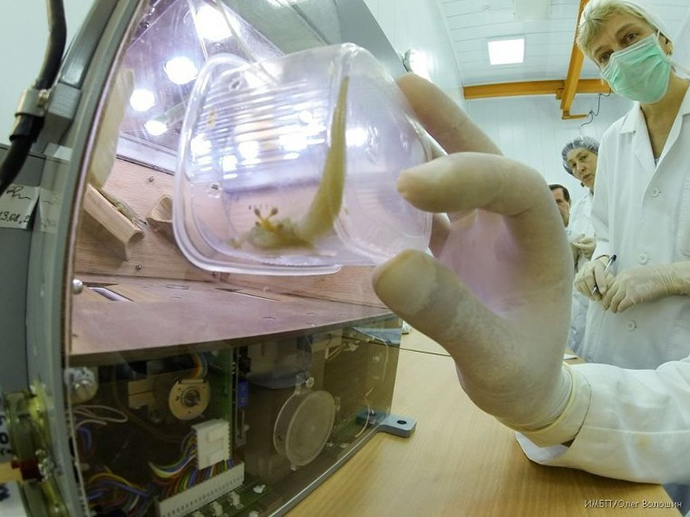
Russia’s space agency has re-established communication with its Foton-M4 satellite in Earth’s low orbit, three days after losing contact. The robotic spacecraft contains geckos participating in experiments on how space conditions impact reproduction. Foton-M4 will be following its current orbit until Monday, while scientists discuss whether their experiments require the original trajectory, which is further from Earth, and engineers try to analyze what may have led to the communication failure. The two main versions considered by Roscosmos are mechanical damage through contact with space debris, and an internal fault in the equipment.

“We have conducted several communication sessions, and the link is stable,” said Roscosmos chief Oleg Ostapenko. 


Credit image: Oleg Voloshin


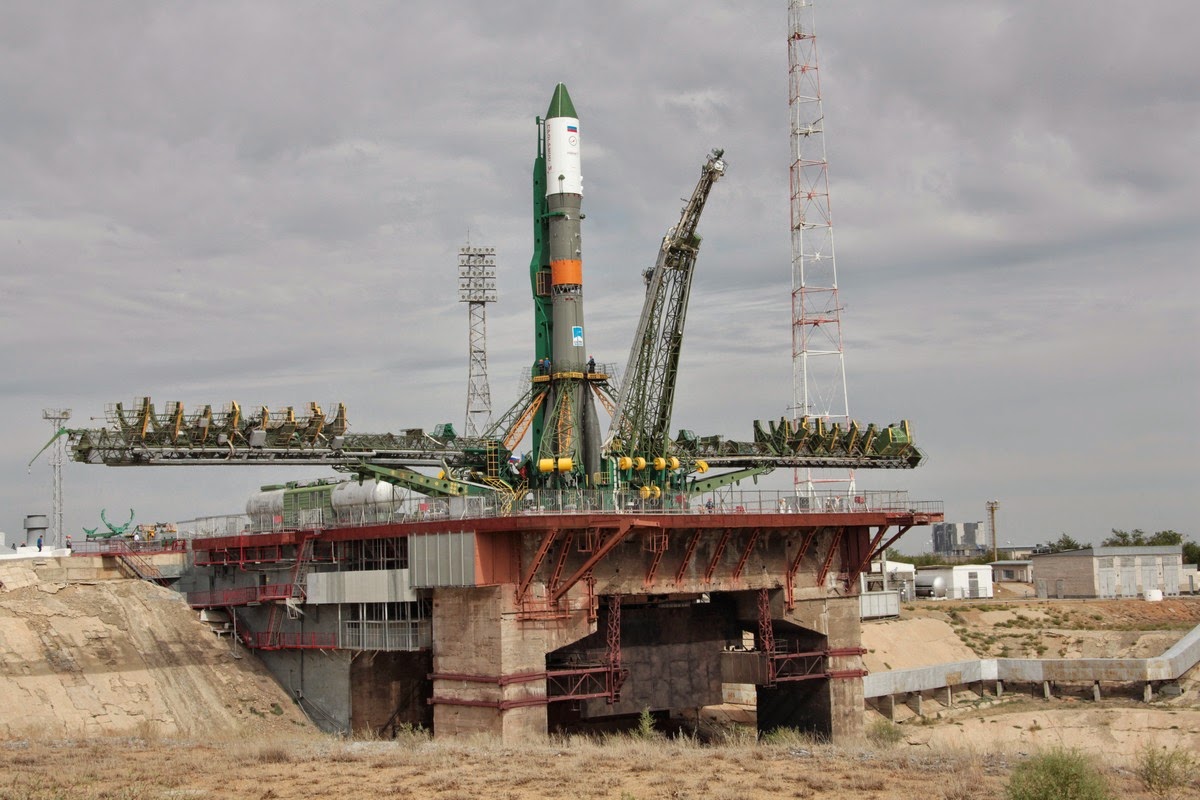
The satellite, the latest in a series that commenced in 2002, is meant to return to Earth in a controlled manner two months after its launch with Soyuz from Baikonur cosmodrome exactly a week ago. 

Credit image: Roscosmos


If, upon its return, it is discovered that the Foton-M4 was damaged by space debris, it will raise concern at the increasing pollution of the atmosphere. There are an estimated 22,000 man-made objects 10 centimeters or larger in orbit – big enough to penetrate the outer covering of the International Space Station ISS.


Contact me if you have any specific questions or to correct some typo error in the articles. 

You can support us with Flattr
Stay tuned

July 25, 2014

"Heavy Metal! I found an iron meteorite on Mars" tweet from Curiosity

Dear readers and followers,


"Heavy Metal! I found an iron meteorite on Mars," Curiosity's handlers wrote on the mission's Twitter page.
Actually, NASA's Mars rover Curiosity has discovered its first meteorite on the Red Planet, and it's no puny space rock.The new found Mars meteorite, which scientist have named "Lebanon," is nearly 2 meters wide and made of iron. Photos of the meteorite taken by Curiosity also revealed a smaller companion nearby, which is now dubbed "Lebanon B." "That 'Lebanon' is huge, almost 2 meters," said Guy Webster from the agency's Jet Propulsion Laboratory in California. 
While NASA released a detailed photo of the Lebanon meteorites Tuesday, July 15th, the Curiosity rover actually discovered the space rocks on May 25th. 


Credit: NASA/JPL-Caltech


Webster said Curiosity also found a third meteorite at the same time it spotted the Lebanon rocks. In a raw, unprocessed photo from Curiosity, the third meteorite, which is also about 2 meters wide, can be seen just beyond the closer Lebanon meteorites. Curiosity snapped detailed photos of the main Lebanon meteorite using its high-resolution Chem-Cam and Remote Micro-Imager cameras. The images revealed strange angular cavities in the surface of the rock.

Altogether, the three meteorites are the first space rocks on Mars discovered by the Curiosity rover since it landed on the Red Planet in August 2012, Webster added.

"One possible explanation is that they resulted from preferential erosion along crystalline boundaries within the metal of the rock," NASA officials wrote in a statement. "Another possibility is that these cavities once contained olivine crystals, which can be found in a rare type of stony-iron meteorites called pallasites, thought to have been formed near the core-mantle boundary within an asteroid."

On Aug. 5th, Curiosity will celebrate its second Earth-year anniversary on Mars. Since landing in 2012, the rover has found evidence that Mars could have been habitable for primitive life, a major mission goal, and has been making its way toward the huge Mount Sharp, which rises from the center of its Gale Crater landing site.

Contact me if you have any specific questions or to correct some typo error in the articles. 
You can support us with Flattr
Stay tuned
July 24, 2014

Russia Loses Control of Orbiting Experiment Module

Dear readers and followers,

Russia’s Roscosmos space agency on July 24 said it had lost control of the Photon-M4 unmanned life- and materials-sciences experiment module launched July 19 but that the 6,840-kilogram module appeared otherwise to be operating normally.

Credit image: Roscosmos


Roscosmos said Photon-M4 was designed to operate autonomously for extended periods and that, for the moment, the many on-board experiments are continuing to function as designed.

Photon-M4, launched aboard a Soyuz rocket from Russia’s Baikonur Cosmodrome in Kazakhstan, is in a 575-kilometer circular orbit inclined at 64.9 degrees relative to the equator. The latest in a series of Bion and Photon capsules, Photon-M4 is designed to operate for about two months before separating from its service module and reentering the atmosphere to be retrieved for experiment analysis.

Roscosmos said ground operators lost control of Photon-M4 after only a few orbits. Their primary objective now, the agency said, is to restore command-and-control links with the spacecraft.

Stay tuned

NASA's project called SLS the biggest space rocket could be over

Dear readers and followers,


Today, Federal auditors annouced that NASA doesn’t have enough money to get its new, $12 billion rocket system off the ground by the end of 2017 as planned. The Government Accountability Office (GAO) report put the current shortfall at $400 million, but it did say that NASA is “making solid progress” on the rocket program design.

The GAO issued a report yesterday saying NASA’s Space Launch System is at high risk of missing its planned December 2017 initial test flight. The post-space-shuttle program would build the biggest rockets ever, larger than the Saturn V rockets that sent men to the moon, to send astronauts to asteroids and Mars.


“They can’t meet the date with the money they have,” report author Cristina Chaplain said. She said it isn’t because the space agency has technical problems with the congressionally required program, but that NASA didn’t get enough money to carry out the massive undertaking.

NASA’s launch-system officials told the GAO that there is a 90 percent chance they won’t be ready for the launch date.

This usually means that NASA has to delay its test-launch date, get more money or be less ambitious about what it plans to do, said former NASA associate administrator Scott Pace, space-policy director at George Washington University.

NASA is still working on the problems the GAO highlighted, but delaying the launch or diverting money from other programs would harm taxpayers, NASA Associate Administrator William Gerstenmaier wrote in the agency’s response.

Contact me if you have any specific questions or to correct some typo error in the articles. 
You can support us with Flattr
Stay tuned

Successful liftoff of the Progress 56 cargo and docking to ISS soon

Dear readers and followers,


last night, the ISS Progress 56 has lifted off (3:44 a.m. local time on July 24 in Baikonur), from the Baikonur Cosmodrome in Kazakhstan. The spacecraft is loaded with about 2600 kg of food, fuel and supplies for the six-person Expedition 40 crew in ISS.

Credit image: Roscosmos


Astronaut Reid Wiseman tweeted this photo of the International Space Station orbiting Earth saying, "We have an open parking spot up here. First come first served! Progress launches tonight." 


Credit image: Reid Wiseman


Stay tuned for the docking

July 23, 2014

Tonight Progress 56 cargo will takeoff from Baikonur to ISS

Dear readers and followers,

Yesterday, the International Space Station (ISS) Progress 56 cargo craft rolled out on a railcar to the launch pad at the Baikonur Cosmodrome in Kazakhstan for final preparations for liftoff. The Progress, loaded with about 2600 kg of food, fuel and supplies for the six-person Expedition 40 crew, will launch Today at 5:44 p.m. EDT (3:44 a.m. Thursday, Baikonur time) on a 4 orbit, and 6 hours fast track rendezvous to dock with the station’s Pirs docking compartment at 11:30 p.m.


Credit image: Roscosmos

Pirs was vacated late Monday with the undocking of the ISS Progress 55 cargo craft, which separated from the station at 5:44 p.m. Progress 55 is now a safe distance from the complex for a series of engineering tests prior to being sent to a destructive re-entry over the Pacific Ocean on July 31st.


At Kourou, French Guiana, technicians are completing tests on the attitude control system in the third stage of the Arianespace Ariane 5 rocket that will launch the European Space Agency’s fifth and final Automated Transfer Vehicle (ATV-5). Arianespace and ESA are working toward establishing a firm launch date, with launch likely to take place early next week. The ATV-5, named the “Georges Lemaitre” in honor of the Belgian physicist and astronomer, is slated to dock to Zvezda on August 12th. 


Live NASA Television coverage of the Progress launch begins at 5:30 p.m. and returns at 11 p.m. for docking coverage. 
You could follow the live video here on SpaceTravelfoundation's blog

Stay tuned

Source

July 11, 2014

NASA confirms that Voyager 1 in interstellar space

Dear readers and followers,


Voyager 1 made headlines around the world last year when mission scientists announced that the probe had apparently left the heliosphere in August 2013. Few weeks ago, new data collected by the +NASA's spacecraft have helped scientists confirm that the far-flung probe is indeed cruising through interstellar space, the researchers say.

Credit image: NASA

They came to this conclusion after analyzing measurements Voyager 1 made in the wake of a powerful solar eruption known as a Coronal Mass Ejection (CME). The shock wave from this CME caused the particles around Voyager 1 to vibrate substantially, allowing mission scientists to calculate the density of the probe's surroundings. 
The CME in question erupted in March 2012, and its shock wave reached Voyager 1 in April 2013. After these data came in, the team dug up another, much smaller CME-shock event from late 2012 that had initially gone unnoticed. By combining these separate measurements with knowledge of Voyager 1's cruising speed, the researchers were able to trace the probe's entry into interstellar space to August 2012.

Credit image: NASA

Now mission scientists from NASA announced on July 7th, that the third CME shock has been really observed by Voyager 1 in March 2014. The spacecraft launched in September 1977, about two weeks after its twin, Voyager 2. The probes embarked upon a "grand tour" of the outer solar system, giving the world some its first good looks at Jupiter, Saturn, Uranus, Neptune and the moons of these planets. Like Voyager 1, Voyager 2 is still active and operational. It took a different route through the solar system and is expected to follow its twin into interstellar space a few years from now.

Stay tuned

July 9, 2014

Testing Completed on NASA's James Webb Space Telescope Backplane


Dear readers and followers,

NASA's James Webb Space Telescope has reached another development milestone with the completion of static load testing of its primary mirror backplane support structure (PMBSS) moving the telescope one step closer to its 2018 launch.
The James Webb Space Telescope is the world's next-generation space observatory and successor to NASA's Hubble Space Telescope. Designed to be the most powerful space telescope ever built, Webb will observe the most distant objects in the universe, provide images of the first galaxies formed and see unexplored planets around distant stars. The Webb telescope is a joint project of +NASA , the +European Space Agency, ESA  and the +Canadian Space Agency . 


Credit image: NASA 


The PMBSS is the stable platform that holds the telescope's science instruments and the 18 beryllium mirror-segments that form the 21-foot-diameter primary mirror nearly motionless while the telescope peers into deep space. The primary mirror is the largest mirror in the telescope -- the one starlight will hit first.

Lee Feinberg, NASA’s Optical Telescope Element manager at the agency’s Goddard Space Flight Center in Greenbelt, Maryland, announced "Static testing demonstrates the backplane has the structural integrity to withstand the forces and vibrations of launch and is the final test prior to starting the integration of the backplane with the rest of the telescope,"
The Northrop Grumman Corporation and ATK of Magna, Utah, completed the testing before delivering the structure to Northrop Grumman's facilities in Redondo Beach, California.

The next step for the space telescope is to integrate the composite structures with the deployment mechanisms to create the overall Optical Telescope Element (OTE) structure. The OTE structure will then be shipped to Goddard for integration with the mirrors. NASA and Northrop Grumman will perform cryogenic testing of the PMBSS structure after mirror integration is complete.


Contact me if you have any specific questions or to correct some typo error in the articles. 
You can support us with Flattr


July 8, 2014

Curiosity in the middle on the Martian sand

Dear followers,


fews day ago, we proposed you an impressive night picture of Curiosity, today a new 360° panorama has been built and published on our blog.


Curiosity Mars rover performed a successful proximity mode deployment of APXS in the wheel track on Sol 673. The images for panorama obtained by the rover's 34-millimeter Mast Camera. The mosaic, which stretches about 30,000 pixels width, includes 137 images taken on Sol 673.


Mars Panorama - Curiosity rover: Martian solar day 673 in The World

Stay tuned

July 7, 2014

Rise of the exoplanet discovery in 2014

Dear readers and followers,


2014 is an amazing year for the announcements of the discovery of expo-planets. The histogram shows the number of planet discoveries by year for roughly the past two decades of the exoplanet search. The blue bar shows previous planet discoveries, the red bar shows previous Kepler planet discoveries, the gold bar displays the 715 new planets verified by multiplicity.

Credit image: +NASA 

Contact me if you have any specific questions or to correct some typo error in the articles. 

You can support us with Flattr
Stay tuned

July 4, 2014

X-Ray picture from NASA reveals a galactic Pyrotechnics called M106

Credit image: +NASA 


This galactic fireworks display is taking place in NGC 4258, also known as M106, a spiral galaxy like the Milky Way. The picture has been taken using X-rays from NASA’s Chandra X-ray Observatory

Contact me if you have any specific questions or to correct some typo error in the articles. 
You can support us with Flattr
Stay tuned

July 3, 2014

NASA will build the most powerful rocket ever with Boeing

Dear readers and followers,

+NASA has reached a milestone in its development of the Space Launch System, or SLS, which is set to be the most powerful rocket ever and may one day take astronauts to Mars. After completing a critical design review, Boeing has finalized a huge  contract of 2.8 billion dollars with the US space agency. The deal allows full production on the rocket to begin. Virginia Barnes, Boeing's Space Launch System vice president and program manager announced “Our teams have dedicated themselves to ensuring that the SLS [...] the largest ever [...] will be built safely, affordably and on time.”


The last time NASA’s completed a critical design review of a deep-space human rocket was 1961, when the space agency assessed the mighty Saturn V, which ultimately took man to the moon.

Work on the 98 meters Space Launch System is spread throughout Southern California, including Boeing's avionics team in Huntington Beach. The rocket’s core stage will get its power from four RS-25 engines for former space shuttle main engines built by Aerojet Rocketdyne of Canoga Park. The rocket, which is designed to carry crew and cargo, is scheduled for its initial test flight from Cape Canaveral, Fla., in 2017.

The rocket will carry the Orion spacecraft, built by Lockheed Martin Corp., which can carry up to four astronauts beyond low Earth orbit on long-duration, deep-space destinations including near-Earth asteroids, the moon, and ultimately Mars.

The first mission will launch an empty Orion spacecraft. The Orion spacecraft is still in development. Few days ago, the parachute system has been tested at very high altitude. The second mission is targeted for 2021 and will launch Orion and a crew of up to four NASA astronauts. The rocket's initial flight-test configuration will provide a 77-ton lift capacity. The final evolved two-stage configuration will be able to lift more than 143 tons.

Stay tuned

July 1, 2014

Amazing night selfie of Curiosity on Mars

Dear readers and followers,

The NASA rover, Curiosity is still exploring the land of the red planet, and it continue to take some pictures and panorama


Today we are pleased to propose you an amazing night panorama. The astronomy fans could observed the milky-way over the martian rover:


Mars Panorama - Curiosity rover selfie: Martian night in The World

The Digital Art Compilation has been done with:
Curiosity Rover's Self Portrait at "Windjana" Drilling Site (sol613) NASA's Mars Exploration Program (Image credit: NASA/JPL-Caltech/MSSS)
VISTA telescope: 9 billion pixel photo of a Milky Way European Southern Observatory (Image credit: ESO/VVV Consortium, Ignacio Toledo, Martin Kornmesser)


Contact me if you have any specific questions or to correct some typo error in the articles. 

You can support us with Flattr
Stay tuned

June 26, 2014

Explore the night sky with Google Glass

Dear readers and followers,

If you are on of the lucky Google Glass explorer, you can explore the night sky thanks to the connected glasses developed and sold by the firm of Mountain View.


The app, called Star Chart has been specifically developed for Google Glass making many changes both big and small to the UI, interface and feature-set. With Star Chart for Google Glass you will get to explore the wonders of our universe by simply looking up at the sky to discover the stars, planets and constellations above you.
Features of Star Chart for Google Glass include:
  • All the visible stars of the northern and southern hemispheres.
  • All the planets of the solar system, the Moon, the Sun and Pluto.
  • All 88 constellations, with imagery based on the beautiful artwork of 17th century astronomer Johannes Hevelius.
  • Audio descriptions of all the planets and many of the brightest stars.
To launch Star Chart for Google Glass simply say: "OK Glass" followed by "Explore the stars".
Once Star Chart has launched simply look at the area of the night sky you are interested and Star Chart will show you what you are looking at.

Source
 

Contact me if you have any specific questions or to correct some typo error in the articles. 

You can support us with Flattr
Stay Tuned

June 25, 2014

Follow in live video the Orion's test parachute on google+

Dear followers and readers,

today (Wednesday June 25th), NASA will perform tests of the parachute system of the new spacecraft called Orion. A test version of Orion is loaded onto a C-17 for a previous test of its parachute system. The test on Wednesday will be the most complex test the system will go through. Watch the test live in a Google+ hangout at 10:30 EDT. So join us there for the live and post your feedback about this impressive test !!!

Credit image: NASA 


Of the 17 parachute drops planned for the developmental test series for the system, this is the 14th and the most complex. A test version of Orion will be pushed out of a C-17 aircraft 11km above the desert of the U.S. Army’s Yuma Proving Ground in Arizona. Only two previous tests have been conducted from such a high altitude, and this one will up the ante further by waiting through 10 seconds of free fall before Orion’s parachutes are deployed.

Those 10 seconds will let Orion build up more speed and aerodynamic pressure before the first of the parachutes is released, to put the maximum amount of stress on them. But even if the test version of the capsule doesn’t land softly on the desert floor, it will give engineers important data that will help them improve the design of the system that will help slow Orion when it bring crew back from destinations and reenters Earth’s atmosphere.


Stay Tuned
 

June 20, 2014

NASA plans to explore Titan moon with drones

Dear readers and followers,


NASA has really great plans for space exploration. The US space agency wants to search Saturn's moon Titan for life but they're having trouble coming up with a good way to cover a large territory and obtain samples. For this, they think they may have a good solution: A 22-pound quadcopter that will work from a mothership.


Despite brisk temperatures of -290 degrees F, Saturn's giant Titan moon is of great interest to scientists, thanks to Earth-like geography, hydrocarbon "lakes" and even possible life. Though NASA's Cassini-Huygens probe visited Titan some time ago, the space agency would like to return at some point -- this time with a quadrotor. 
Using the latest drone and sensor tech, it would weigh less than 10kg, deploy from a recharging nuclear "mothership" balloon and acquire high-res images from close to the surface. With the benefit of that reconnaissance, it could land at promising spots, take microscopic photos and scoop up samples to be analyzed later by the mothership. NASA plans to develop the mission concepts further and design the drone in collaboration with AeroVironment.

Stay tuned.

Source

June 16, 2014

Google in talks with Virgin Galactic

Dear readers and followers,

The Montain View firm continue to develop its interest for space companies. After the purchase of Skybox Imaging few days ago, the search giant is in talks about a deal to take a stake in Sir Richard Branson's space tourism venture. Negotiations between the two companies have been taking place for months, and are said to be at an advanced stage.
The deal could be reputationally valuable for Virgin Galactic, which has had to defend itself against frequent suggestions that problems with its development will curb its viability.


The talks are likely to lead to a deal with two main elements, according to insiders:
The first will see Google inject hundreds of millions of dollars into a joint venture, with Virgin Galactic folding in the technology it has developed as part of its efforts to build the world’s first space tourism business. The second component will involve Google spending roughly 30 M$ in return for a small stake in the Virgin Galactic holding company.

The company has insisted that flights should begin this year, although there is no firm date, while rivals such as Elon Musk, the billionaire businessman, are developing competing projects. Celebrities including Ashton Kutcher, Katy Perry and Sir Richard himself are said to have paid $200,000 to secure seats on the venture’s inaugural flights.

Source