Google+ SpaceTravelFoundation

July 1, 2014

Amazing night selfie of Curiosity on Mars

Dear readers and followers,

The NASA rover, Curiosity is still exploring the land of the red planet, and it continue to take some pictures and panorama


Today we are pleased to propose you an amazing night panorama. The astronomy fans could observed the milky-way over the martian rover:


Mars Panorama - Curiosity rover selfie: Martian night in The World

The Digital Art Compilation has been done with:
Curiosity Rover's Self Portrait at "Windjana" Drilling Site (sol613) NASA's Mars Exploration Program (Image credit: NASA/JPL-Caltech/MSSS)
VISTA telescope: 9 billion pixel photo of a Milky Way European Southern Observatory (Image credit: ESO/VVV Consortium, Ignacio Toledo, Martin Kornmesser)


Contact me if you have any specific questions or to correct some typo error in the articles. 

You can support us with Flattr
Stay tuned

June 26, 2014

Explore the night sky with Google Glass

Dear readers and followers,

If you are on of the lucky Google Glass explorer, you can explore the night sky thanks to the connected glasses developed and sold by the firm of Mountain View.


The app, called Star Chart has been specifically developed for Google Glass making many changes both big and small to the UI, interface and feature-set. With Star Chart for Google Glass you will get to explore the wonders of our universe by simply looking up at the sky to discover the stars, planets and constellations above you.
Features of Star Chart for Google Glass include:
  • All the visible stars of the northern and southern hemispheres.
  • All the planets of the solar system, the Moon, the Sun and Pluto.
  • All 88 constellations, with imagery based on the beautiful artwork of 17th century astronomer Johannes Hevelius.
  • Audio descriptions of all the planets and many of the brightest stars.
To launch Star Chart for Google Glass simply say: "OK Glass" followed by "Explore the stars".
Once Star Chart has launched simply look at the area of the night sky you are interested and Star Chart will show you what you are looking at.

Source
 

Contact me if you have any specific questions or to correct some typo error in the articles. 

You can support us with Flattr
Stay Tuned

June 25, 2014

Follow in live video the Orion's test parachute on google+

Dear followers and readers,

today (Wednesday June 25th), NASA will perform tests of the parachute system of the new spacecraft called Orion. A test version of Orion is loaded onto a C-17 for a previous test of its parachute system. The test on Wednesday will be the most complex test the system will go through. Watch the test live in a Google+ hangout at 10:30 EDT. So join us there for the live and post your feedback about this impressive test !!!

Credit image: NASA 


Of the 17 parachute drops planned for the developmental test series for the system, this is the 14th and the most complex. A test version of Orion will be pushed out of a C-17 aircraft 11km above the desert of the U.S. Army’s Yuma Proving Ground in Arizona. Only two previous tests have been conducted from such a high altitude, and this one will up the ante further by waiting through 10 seconds of free fall before Orion’s parachutes are deployed.

Those 10 seconds will let Orion build up more speed and aerodynamic pressure before the first of the parachutes is released, to put the maximum amount of stress on them. But even if the test version of the capsule doesn’t land softly on the desert floor, it will give engineers important data that will help them improve the design of the system that will help slow Orion when it bring crew back from destinations and reenters Earth’s atmosphere.


Stay Tuned
 

June 20, 2014

NASA plans to explore Titan moon with drones

Dear readers and followers,


NASA has really great plans for space exploration. The US space agency wants to search Saturn's moon Titan for life but they're having trouble coming up with a good way to cover a large territory and obtain samples. For this, they think they may have a good solution: A 22-pound quadcopter that will work from a mothership.


Despite brisk temperatures of -290 degrees F, Saturn's giant Titan moon is of great interest to scientists, thanks to Earth-like geography, hydrocarbon "lakes" and even possible life. Though NASA's Cassini-Huygens probe visited Titan some time ago, the space agency would like to return at some point -- this time with a quadrotor. 
Using the latest drone and sensor tech, it would weigh less than 10kg, deploy from a recharging nuclear "mothership" balloon and acquire high-res images from close to the surface. With the benefit of that reconnaissance, it could land at promising spots, take microscopic photos and scoop up samples to be analyzed later by the mothership. NASA plans to develop the mission concepts further and design the drone in collaboration with AeroVironment.

Stay tuned.

Source

June 16, 2014

Google in talks with Virgin Galactic

Dear readers and followers,

The Montain View firm continue to develop its interest for space companies. After the purchase of Skybox Imaging few days ago, the search giant is in talks about a deal to take a stake in Sir Richard Branson's space tourism venture. Negotiations between the two companies have been taking place for months, and are said to be at an advanced stage.
The deal could be reputationally valuable for Virgin Galactic, which has had to defend itself against frequent suggestions that problems with its development will curb its viability.


The talks are likely to lead to a deal with two main elements, according to insiders:
The first will see Google inject hundreds of millions of dollars into a joint venture, with Virgin Galactic folding in the technology it has developed as part of its efforts to build the world’s first space tourism business. The second component will involve Google spending roughly 30 M$ in return for a small stake in the Virgin Galactic holding company.

The company has insisted that flights should begin this year, although there is no firm date, while rivals such as Elon Musk, the billionaire businessman, are developing competing projects. Celebrities including Ashton Kutcher, Katy Perry and Sir Richard himself are said to have paid $200,000 to secure seats on the venture’s inaugural flights.

Source

June 3, 2014

The NASA's lander Morpheus uses hazard detection system to land safely in dark

Credit image: +NASA / Mike Chambers


NASA demonstrated that it can land an unmanned spacecraft on a rugged planetary surface in the pitch dark in a May 28, 2014 free-flight test of the Morpheus prototype lander and Autonomous Landing Hazard Avoidance Technology, or ALHAT

May 28, 2014

Web companies come in the space race

Dear readers and followers,

Web companies such as Google and Facebook from the Silicon Valley ramp up efforts to connect the world to their services, they are increasingly looking to the skies and higher.

At Google, several signs point to satellites. Actually, Previously Google bought drone-maker Titan Aerospace last month and now it's in talks to buy Skybox Imaging, a startup that creates high-resolution satellite images, for $1 billion. 
Moreover, last month, Google hired Brian Holz, who was chief technology officer at O3b Networks, which has launched special satellites to try to broadcast signals that would power new Internet service in developing countries around the world. Google had previously made a financial investment in O3b and one of its employees sits on O3b’s board. The startup’s recently-launched satellites faced technical setbacks this year.

Google also recently hired Dave Bettinger, who had spent 18 years at satellite firm VT iDirect, which supplies high speed broadband and other communications to military services and the oil and gas industry, according to people at Google. VT iDirect also suffered some product delays recently.


The two apparently go hand-in-hand for Google which uses high-resolution satellite images for Google Maps and its business-to-business branch, Earth Enterprise, which creates maps for companies, according to TechCrunch. Previously Google was also looking at other satellite imaging companies such as Planet Labs, but has now zeroed in on the Mountain View, Calif. company.


Skybox previously raised $70 million in 2012 and was valued around $600 million, but Google's reported $1 billion is making the deal happen, according to an unnamed TechCrunch source.

“A constellation of small imaging satellites, like what we already have in place today with RapidEye or what Skybox may have in the future, would give Google a very reliable, rich content source for imagery analytics and related applications,” Scott Soenen, CTO at another satellite company, BlackBridge, told TechCrunch.

Stay tuned

May 26, 2014

Student built rocket took off from the Bonneville salt flats, Utah

Credit image: NASA - Dusty hood 


A student-built rocket took off from the brilliant white hardpan of the Bonneville Salt Flats in Tooele County, Utah, May 17th 2014 during the Student Launch rocketry competition. 
Sixteen teams, comprised of some 250 student participants from 15 states, launched rockets of their own design, complete with three working science and engineering payloads apiece, cheered on by approximately 500 spectators.

NASA Student Launch is an annual education event, designed to inspire young people to pursue studies and careers in the science, technology, engineering or mathematics field. The event is organized by NASA's Marshall Space Flight Center in Huntsville, Alabama, and sponsored by ATK Aerospace Group of Magna, Utah. The grand-prize-winning school team will be named by NASA and ATK in late May. 

April 30, 2014

Successful space launch performed by the ESA rocket Vega

Dear readers and followers,

yesterday night, April 30th, the space launcher of the +European Space Agency, ESA called Vega, succeeded its Arianespace’s fourth mission so far in 2014, putting the company on track to perform a total of 12 launches from Europe’s Spaceport during the year. The lift-off occurred at the space center in Kourou, French Guiana, at 10:35 pm local time.

Credit: ArianeSpace

This launch leads to orbit an 800 kg Earth observation spacecraft, called KazEOSat-1 which will provide many images to the Republic of Kazakhstan with a complete range of civil applications; for instance, the monitoring of natural and agricultural resources, provision of mapping data, and support for rescue operations in the event of a natural disaster.


Stay tuned

April 29, 2014

Curiosity captured the first ever asteroids observed from the Martian planet

Dear readers and followers,


last week, on April 24th, the NASA's rover, Curiosity, switched its usual activity to observe the sky over the martian land. Using its camera, the rover captured the first ever picture of an asteroid observed from the martian planet.


Credit: NASA 


The both asteroid presented on the picture are the very small planet called Ceres ( 950 km of diameter) and Vesta (563 km of diameter). Ceres is the biggest asteroid of the asteroid belt.

April 24, 2014

Space Selfie outside the International Space Station

Dear readers and followers,


Yesterday, during a spacewalk outside ISS, an astronaut snapped this Space Selfie! It's been said that it's difficult to get a good selfie while wearing a spacesuit. Astronauts Steve Swanson and Rick Mastracchio completed a short spacewalk to replace a failed Multiplexer/Demultiplexer (MDM) back up computer. The backup computer failed April 11th after a routine health check by the Mission Control team in Houston said NASA.  

Credit: +NASA 

April 22, 2014

Aurora & astro movie made in northern arctic Scandinavia


The movie was filmed in Norway, Finland and Sweden, primarily around the Tromsø area, Norway by Ole C. Salomonsen.


April 10, 2014

Meteorite passed close to a skydriver during its jump

Dear readers and followers,

This is the first time in history that a meteorite has been filmed in the air after its light goes out.


Enjoy this great video of the jump and the story associated:


Stay tuned

April 8, 2014

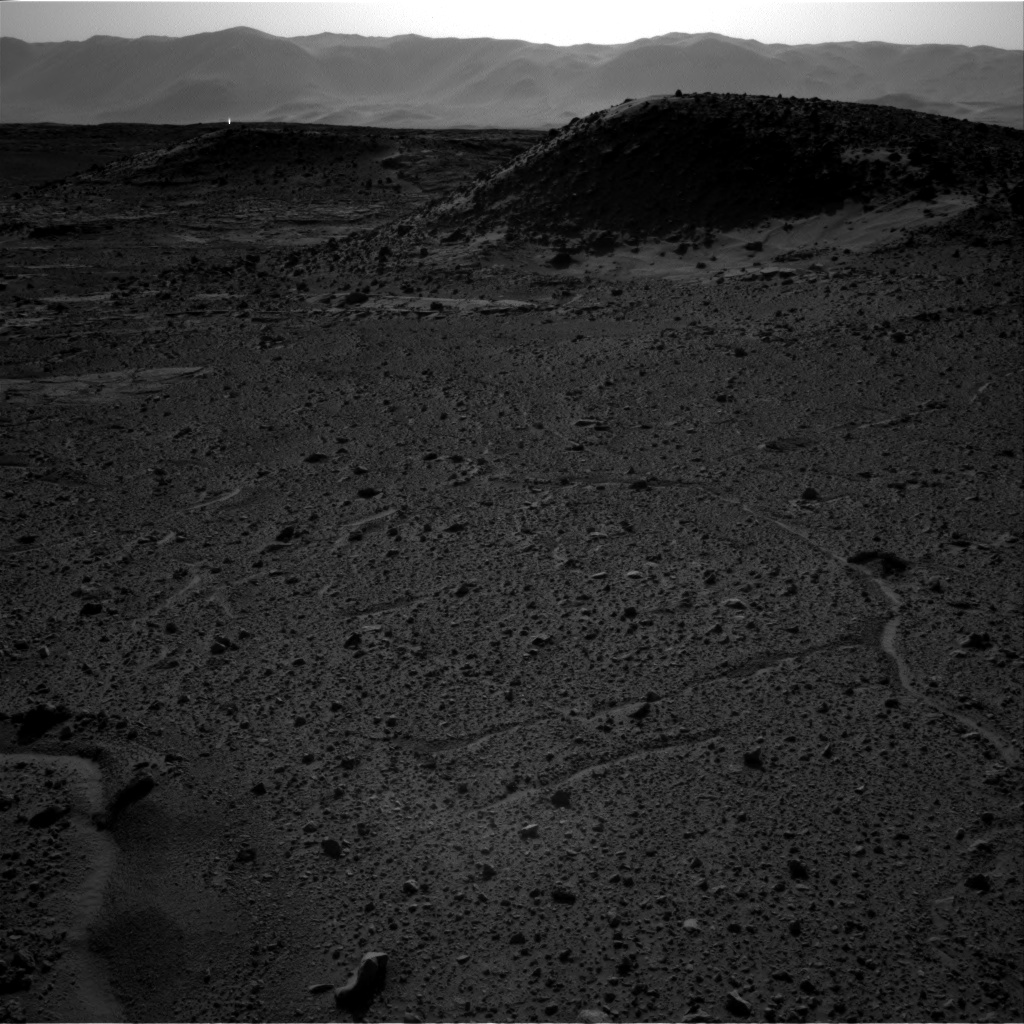
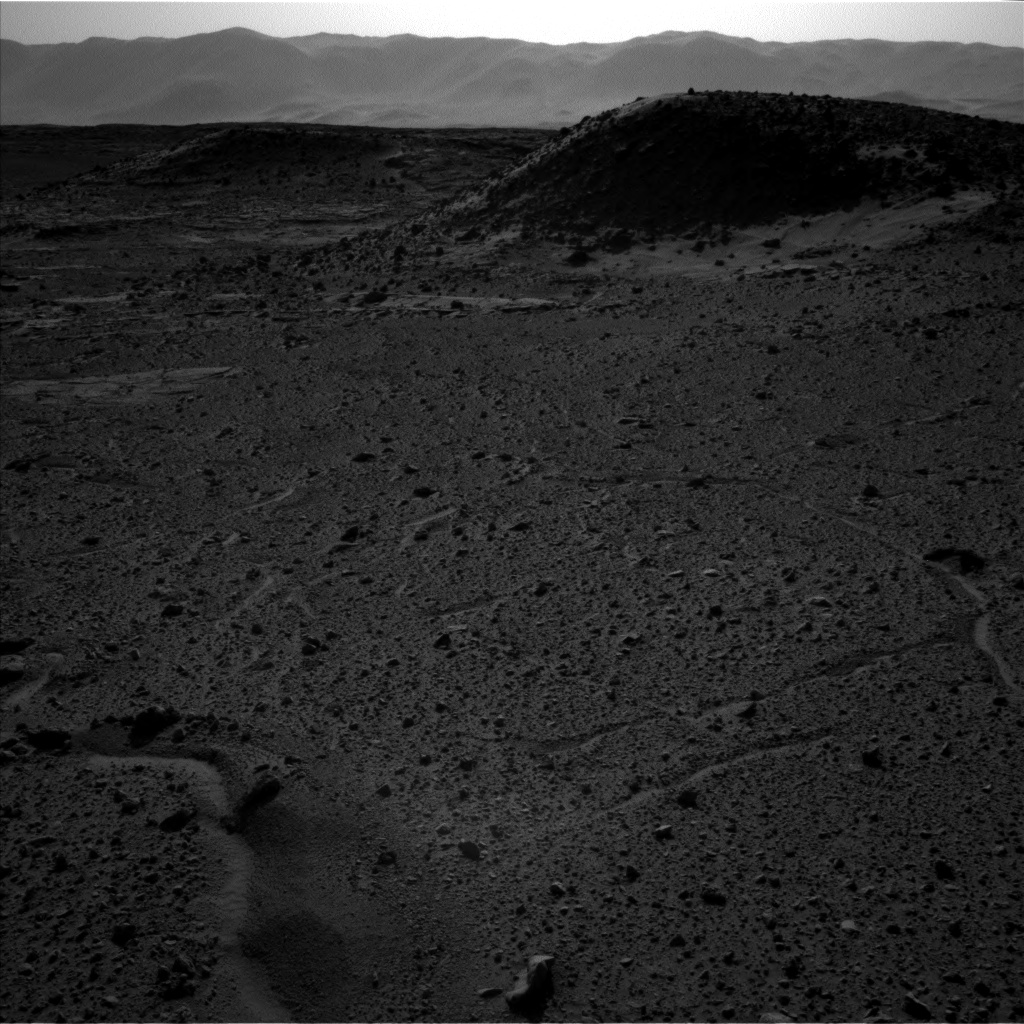
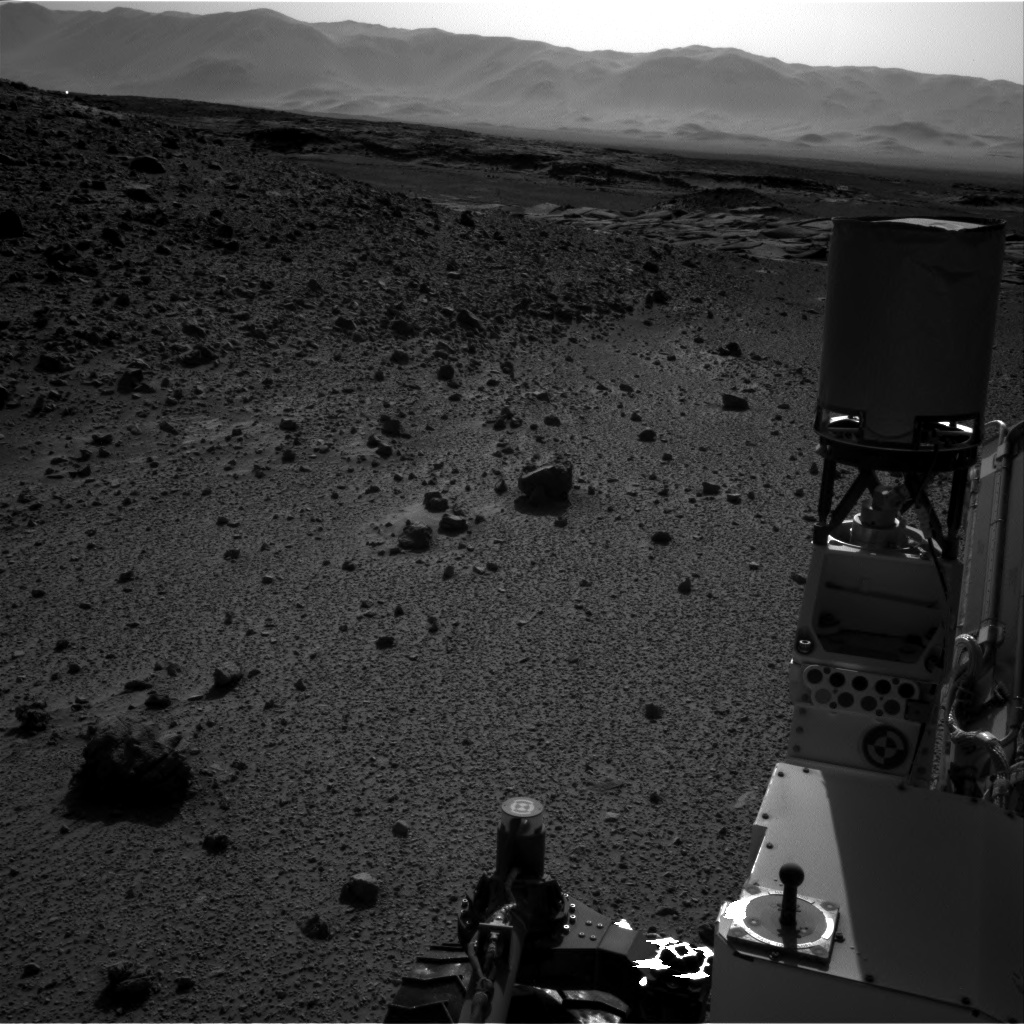
A light has been observed on Mars by the rover Curiosity


Credit: +NASA 


A light has been observed on the red planet by the NASA's rover Curiosity .
What is your opinion about this ?


it seems that the light is induced by a cosmic ray hit said an engineer from +NASA Jet Propulsion Laboratory . Actually, the light it is not observed in the left-Navcam image taken at the exact same moment.

Doug Ellison, an imaging guru who happens to work at JPL, quickly told me in a Twitter update that the bright spot is due to a "cosmic ray hit" affecting the rover. (Later: The Surrey Space Center's Chris Bridges agrees.)

Update for 12:50 a.m. ET April 8: Here's a recap of the four pictures we're talking about:

April 7, 2014

NASA finds the largest know galaxy called El Gordo with the Hubble telescope


The NASA team using data from Hubble Space Telescope has weighed the largest known galaxy cluster in the distant universe, catalogued as ACT-CL J0102-4915, but its nickname is El Gordo which means "the fat one" in Spanish.

March 28, 2014

Successful docking of Soyuz TMA-12M with ISS after engine trouble delays arrival

Dear readers and followers,


Wednesday March 26th, we reported that the Soyuz spacecraft which liftoff from Baikonur had to change the docking procedure to the International Space Station (ISS) due to a engine failure during its space launch.
Today, the Russian spacecraft arrived and docked with ISS using the previous standard procedure which needed 2 additional days of flight (34 Earth orbit).


Credit: Euronews 

The new crew considering 3 astronauts, the Russian Cosmonauts Aleksandr Skvortsov and Oleg Artemyev and the NASA astronaut Steven R. Swanson will spend 6 months in the international Space Station.


Stay tuned

March 27, 2014

The SpaceX-3 resupply mission to ISS postponed again

Dear readers and followers,


today, NASA and SpaceX have been confirmed that Sunday's launch (March 30th) of its third contracted resupply mission to the International Station (ISS) has been postponed due to a range asset issue. 


Credit: SpaceX 


The spacecraft should resupply ISS but also deploy the next generation module for data communication using a laser, called OPALS for Optical Payload for Laser ScienceMore information including a new target launch date will be posted as it becomes available. 

Stay tuned.


Find the french version of the article there

March 26, 2014

Successful launch of the space mission Expedition 39 in Soyuz TMA-12M to ISS

Dear readers and followers,

yesterday night, three new crew members, the Russian Cosmonauts Aleksandr Skvortsov and Oleg Artemyev and the NASA astronaut Steven R. Swanson blasted off into Space tonight  at 21:17 UTC in the TMA-12M spacecraft onboard the space rocket Soyuz-FG from the Russian Baikonur cosmodrome in Kazakhstan


Credit: Rt.com


The new crew, will dock to the International Space Station 6 hours after their launch and join the current crew members already onboard. Their mission on ISS will take around 6 months. Find below the video of the take-off.

 
Credit: NASA 


Update: Due to a failure, the spacecraft has to change the docking process to ISS. The spacecraft will use the previous standard process for the docking which needs to make 34 orbits of Earth. Stay tuned


Stay tuned

March 24, 2014

59th straight success for Ariane 5 from Kourou

Dear followers and readers,


last Saturday, March 22th 2014, the European space rocket, Ariane 5, performed with success a flawless launch from Europe’s spaceport at Kourou, French guiana. The space rocket orbited two telecommunications satellites, ASTRA 5B and Amazonas 4A. The flight was the European launcher’s 59th straight success since 2003. 


Credit image: CNES 

Stay tuned

March 21, 2014

Bring Astronomy on your wrist

Dear readers and followers,


If you are looking for a amazing gift or simply for yourself and that you want to bring some astronomy with you Jacob & Co. proposes THE WATCH you need! The creation called Astronomia Tourbillon includes a dial for the time (that remains upright in all positions as it moves around the main dial) a rotating representation of the earth, a spinning spherical crystal (perhaps a diamond), and lastly, an impressive looking bi-axial tourbillon. 


Credit: Jacob & Co

This is all based on a wonderful looking planetary gear arrangement that any engineering student (or watchmaker) would be proud to have as their term project. Enjoy this video:


Credit: Jacob & Co
Contact me if you have any specific questions or to correct some typo error in the articles. 

You can support us with Flattr

Stay tuned

March 20, 2014

Dance of stars in the night sky over the Po delta

Credit: Dave sixtyfour 

This Startrail has been set in the "Sacca di Scardovari", a lagoon, where they are grown mussels and clams, of the Po River located in the northeast of Italy in the province of Rovigo. Over 200 shots has been combined with the software "startrails." and the exposure of each shot is about 25-30 seconds.

March 18, 2014

Extraordinary discovery of the gravitational waves: The Big Band Theory

Dear readers and followers,


yesterday US scientific community announced a huge event about the Big Bang theory: Astronomers have found the first direct evidence of cosmic inflation, that put the "bang" in the Big Bang 13.8 billion years ago. The team led by J. M. Kovac reported that they detected ripples in the fabric of space time, called gravitational waves. These waves has been identify to be the signature of a universe being wrenched violently apart when it was roughly a trillionth of a trillionth of a trillionth of a second old, so quite short time.

Credit: By Karl Tate

The data obtained with telescope at the South Pole obtained 3 years ago has been analysed many and many time with the aim to verify all the possible hypothesis. 
This discovery could be one of the most extraordinary discovery. the Harvard astronomer Avi Loeb compares this discovery to a 1998 observation that opened the window on mysterious dark energy which won the Nobel price in 2011.
Enjoy this video explaining the discovery of gravitational waves.


Stay tuned

March 16, 2014

Successful launch of Proton-M rocket with Russian AT1 and AT2 communication satellites

Dear readers and followers,


2 days ago, the space rocket, Proton-M was ready on its launch pad at Baikonur, Kazakhstan. The payload was two satellites of communication, built for the Russian Satellite Communications Company Express AT1 and Express AT2.

Credit: Russian Space Agency Roscosmos

If you missed the successfully, enjoy this video proposed from our Event: The rocket carried two communications satellites into orbit. 
AT1 satellite will be positioned at 56 degrees East with 32 Ku-Band transponders to cover Russia. In an other hand, the AT2 satellite will be positioned at 140 degrees.

Credit: SpaceVidNet

Stay tuned

March 14, 2014

ISS data communication boosted by the laser OPALS

Dear followers and readers,


The bandwidth speed of the communications between the International Space Station and Earth is a real bottleneck for the scientific experiments. But NASA decided to fix this problem. The slowness of capturing data from ISS is about to go into serious overdrive with a new laser communication experiment set which will be launch to ISS this weekend. The experiment gear is called OPALS for Optical Payload for Laser Science


OPALS transfers the video data from ISS to the ground receiver at JPL's Optical Communications Telescope Laboratory (OCTL) in Wrightwood, California. As the ISS travels across the sky, a laser beacon is transmitted from the ground telescope to the payload on ISS and tracked. The main existing deep space missions send back 200k to 400k bits of information per second. OPALS will send information by laser beam rather than radio wave, demonstrating a speed of up to 50 megabits per second. Future deep space optical communication systems should reach up to one gigabit per second.
The OPALS module will be sent up to the space station aboard the cargo Dragon from the private company Space X. Its launch is planned next Sunday, March 16th.


Credit: NASA 

Stay tuned for the space launch of OPALS module

[Update] The Dragon launch was postponed to March 30. Stay tuned 

March 13, 2014

[Update] Chinese satellites may detected debris from the missing malaysia Airlines flight [nor not]

Dear readers and followers,

last week we knew about the dramatic missing of the Malaysia Airline flight. Today, Chinese satellites may have detected debris from the missing Malaysia Airlines flight, as illustrated below. 


Credit: AFP

Chinese government satellites orbiting Earth may have detected floating, crash related debris from the missing Malaysian Airline flight MH-370. This discovery could be a key finding in spurring the ongoing and so far fruitless search efforts.

Stay tuned

[Update] Chinese admitted mistake in releasing images. They retracted that statement and said the picture was not supposed to be released.

Star trail and Aurora in Scotland captured by amateur photographer

Credit Chris Sinclair 

The picture has been taken in March 2nd in Scotland

March 12, 2014

NASA proposes a reward of 35 k$ for an asteroid hunter software

Dear followers and readers,


the danger for the Earth planet induced by hazardous asteroids is a field which interests strongly all the space agency. NASA is used to detect, track and characterizes space comets and hazardous asteroids. A dedicated program called Near-Earth Object Observation, also named Spaceguard has been created by the space agency in order to present dramatic event. For this reason +NASA decided to propose a reward of 35 k€ for an asteroid hunter software.


During the three months of 2014, couple hazardous asteroids passed close to Earth such as the asteroid called 2014 DX110 last week. This asteroid was quite small, around 30 meters of diameter. However, in February 2014, an other wider asteroid was observed close to Earth, 2000 EM26: this one was really wide, around 270 meters of diameter, the equivalent of 3 football field.
With the number of asteroids growing, the US space agency would mine the talent from the general public. NASA hopes to spot dangerous space rocks such as the one that saw off the dinosaurs 66 million years ago. In order to increase the interest of people, NASA is offering up to $35,000 over the next six months to anyone who is able develop computer code that can identify life-threatening asteroids.

The challenge started by NASA consists in developing significantly improved algorithms to identify asteroids in images captured by ground-based telescopes.
"The winning solution must increase the detection sensitivity, minimize the number of false positives, ignore imperfections in the data, and run effectively on all computer systems" defined NASA.

Stay tuned and try your chance to save Earth !


March 11, 2014

Video of sunset and night at the National Astronomical Observatory in Bulgaria

Credit: Nikola Petrov and Emil Ivanov


The video was performed in 2010 at NAO Rozhen, Bulgaria, with images taken with Canon 40D camera and 18mm f/1,8 lenses.


March 10, 2014

Explore the land of Mars with Curiosity for its 531 martian days on the red planet

Dear readers and followers,


After, 531 Martian days the NASA's rover, Curiosity is still working and performing its exploration of the red planet even if the space rover had some power glitch which perturb its functioning. This new interactive 360° panorama has been built with 130 images for a total resolution of 30,000 pixels widths !!! Dingo Gap is visible on the left where the rover traversed a small dune ripple to get into more better terrain for its wheels.


Credit : +Andrew Bodrov 

March 6, 2014

The asteroid 2014 DX110 tracked by astronomers

Dear readers and followers,

yesterday night we reported you that an asteroid of 30 meters of diameter will be close to Earth. This asteroid called 2014 DX110 has been tracked and taken in picture by astronomers. You will find also a video, enjoy

Credit image : L. Elenin


 Credit image: Slooh


Stay tuned

March 5, 2014

Tonight check out the asteroid 2014 DX110 closer than the Moon

Dear readers and followers,

Tonight, at 10 pm CET (1 p.m. PST) Wednesday March 5th, an asteroid will very close to Earth. Actually closer than the distance from Earth to the Moon. 
This time, the asteroid called 2014 DX110 is estimated to be around 30 meter of diameter and its closest approach to our planet will be around 350,000 km. NASA is used to detect, track and characterizes space comets and hazardous asteroids. A dedicated program called Near-Earth Object Observation, also named Spaceguard has been created by the space agency in order to present dramatic event. This kind of event is quite usual, actually around 20 times a year said +NASA . 


Last month, a hazardous asteroid with a diameter estimated to 3 times the size of a football field and called 2000 EM26 passed close to Earth. This time due to weather conditions, none observation gears could take some great picture of the asteroid.

Credit image: Daily Galaxy

This time we hope that official observation places and amateur astro-photographers could take some impressive picture of the asteroid 2014 DX110.

Live video by +Slooh of the asteroid tracking :


Stay tuned for pictures from all around the world

Source

Great picture capturing Milky Way and Venus in South Australia

Credit image: Dave Gen

The picture has been taken with a Nikon D3100 uding a Sigma 18-250mm lens and PP Lightroom 5 from South Australia over over Sellicks Hill.

March 4, 2014

Amazing panoramic picture of the milky way taken in the Mountains of New Hampshire

Credit image: Christopher Georgia


The picture has been built with 15-shot panoramic image north of Franconia Notch State Park, N.H. on July 2013. The photographer used a Nikon D3s camera, Nikon 14-24mm lens at 15mm, exposure 22 seconds x 15, f/2.8 and ISO 2500, to capture the photo.

March 3, 2014

Amazing video of Bulgaria night sky


Credit image: Nikola Petrov and Emil Ivanov

A whole night at Rozhen National Astronomical Observatory, Bulgaria in September 2010. 
The frames are taken each 25 seconds. The video combines 764 individual images with a Canon 40 D camera with 20mm Sigma lenses at F/1.8.